Showing posts with label writers. Show all posts

Friday, 30 October 2015

For He’s a Jolly Good Fellow! The Joy of Horror with Ramsey Campbell…


Ramsey Campbell needs no introduction, but if you would like one have a read of this potted biography from when he was awarded an Honorary Fellowship from Liverpool John Moores University earlier this year.

Yes, Ramsey Campbell is a horror writer - and proud of it - yet he has managed to transition from great genre kudos to writerly acclaim in the wider literary world. He has been garnered with scores of major awards, including ten British Fantasy Awards, four World Fantasy Awards, three Bram Stoker Awards, and the Horror Writers’ Association’s Lifetime Achievement Award.

Ramsey Campbell is a prolific writer and reader...
The Scrawl is proud to present a very special Halloween treat – in this extensive interview, Ramsey Campbell talks to Remy Dean about people, places, the past, the present and generously shares some top tips that will benefit any writer… 

Remy: I grew up near Ormskirk, on the Lancashire flatlands, and the house you describe in Again seemed unnervingly familiar – I feel that I have hurried passed it on country walks, because of a disturbing reflection caught in one of its windows… Such a sense of place is a prominent part of your writing.

What usually happens – does a story come to you and then you think, ‘where shall I set this one?’ or, does visiting a place suggest the story? Either way, is this strong sense of place created ‘poetically’ or through ‘proper research’ into the past of a place and ‘location visits’?

Ramsey: “Very often the place is the seed of the tale. I believe I owe some of this perception to the great Fritz Leiber, in particular one of his earliest and most important tales, Smoke Ghost. Instead of being invaded by the supernatural, the mundane setting – forties Chicago – is now its source, and the grubby half-glimpsed spectre its genius loci.

"In my case the fruitful setting is Liverpool. It has been for forty years, ever since I wrote my first tale set there in 1965 – The Cellars, which grew out of an actual underground location in the city centre – and is still enlivening my imagination, recently in Creatures of the Pool, my ultimate Liverpool novel. That’s founded on decades of research into local traditions and history, and I’m weirdly pleased that because the process was so protracted, I no longer always recognise which bits I simply found in obscure volumes and which I made up. Since the book is to some extent about Liverpool as a pool of legends, I’m rather pleased that it has the potential to become one.

"By contrast, stories using invented settings – Moonwell, Goodmanswood, and so on – tend to build their locations out of my memories. I’m intrigued you found the house in Again recognisable. In fact that tale came out of an idea – my having, as a child, once had to climb in a window of the house when my mother left her keys inside... and then the kind of train of thought we writers have, wondering what might happen if an adult found himself in the same situation. The Wirral Way was just a convenient spot to start from."

You may have invented the urban gothic genre, consolidated in the early 1980s by the likes of Clive Barker, and you both hail from Merseyside – was there a scene (I mean a literary one) based in Liverpool back then that you both were part of?

"Well, I rather think I was writing that kind of tale more than a decade earlier. The Cellars was first published in 1967, and Cold Print not long after. They typify a tendency in my tales to explore the darker areas of city life. Again, I don’t think my stuff gets much more urban or Gothic than The Face That Must Die from 1977.

"Clive – well, I gave a talk on horror to the sixth form at his school back in the early seventies, and he was in the audience. He cites it as a formative experience – meeting someone who actually did the kind of thing he wanted to do for a living. The Liverpool literary scene back then mostly involved poets, and I wasn’t part of it, while Clive was already involved in the theatre, writing and directing friends. All that said, I do think Liverpool has produced a lot of creativity in all sorts of fields, and Clive and Pete Atkins and I were the dark trio it set loose on the world."

The English Eerie is a term being used quite a lot recently (as an example see Adam Scovell’s magnificent weblog, Celluloid Wicker Man). I would say that you are the leading contemporary proponent of this sub-genre - with M R James sowing the first seeds. So, what do you think are its defining components and what marks it aside from the Gothic? Also, with your evident interest in and love for Lovecraft and Poe, what do you think differentiates the American Eerie?

"Well, thank you! I suppose it involves more of the spectral or fantastic than the Gothic generally does - after all, one of the great modern Gothic trilogies is Peake’s Gormenghast series, which involves nothing actually fantastic, though much that is grotesque. As to national differences – I really don’t know...

"In a way Poe and Le Fanu were similar, both refining the Gothic novel and concentrating the uncanny and fantastic elements while also scrutinising the psychological. The English tended towards the mystical and numinous for a while – Machen, Blackwood – but then of course Lovecraft united that tradition with the American, and later Leiber was to bring the unification up to date. Indeed, later writers such as T E D Klein do."

Why do you think English-language cinema shies away from producing your material for the big screen? I am truly surprised your stories are not continually optioned by British indie film producers – so why are the only two major adaptations Spanish language? With Guillermo del Toro making movies like The Orphanage, Devil’s Backbone, Crimson Peakhas Spain finally hijacked the Gothick genre?


Los Sin Nombre aka The Nameless - Spanish film adaptation
"Well, there are English-language options on some of my work, and I’m hoping they’ll prove fruitful. The first Spanish film led to the second – I was in Madrid helping to promote Los Sin Nombre on a radio show and talked about my new book, which the producers immediately wanted to buy. Sadly, they bought the first submitted draft to develop, and it needed a great deal of work, which I put in on the novel while another writer did so for the film.

"I don’t know that Spain has snaffled the field for ever. There’s some pretty fine work being made in Britain and America and elsewhere."

Drawing on your experience as a film critic – which of your own stories would you most want to see adapted for cinema? Who would be in that ‘dream’ cast and crew?

"Needing Ghosts often strikes me as the basis for a disconcerting film, as does The Grin of the Dark. But who would be in the films or make them I couldn’t say, though I do dream of David Lynch."

Whilst we are on the subject of films, what recent films (horror / dark fantasy /  other) would you suggest for my watch list?

"It Follows, Kill List, The Borderlands, The Casebook of Eddie Brewer, Absentia, Oculus… those have all kept my enthusiasm for disquieting horror alive. Outside the field as it’s generally perceived, Paddington - which is sometimes unexpectedly reminiscent of Wes Anderson, whose films I’ve also grown fond of, Certified Copy and almost anything else by Kiarostami that I’ve seen - especially Shirin, The Turin Horse, Tu N’avais Encore Rien Vu - which I admit I liked far more than Resnais’ next film, his last, Amour - Haneke, Once Upon a Time in Anatolia, I Wish…"

Probably my favourite of your books in my collection is the edition of Alone with the Horrors, featuring illustrations by J K PotterI believe he has repeatedly produced work inspired by your stories and their locations – did you have any creative input on this and what do you think of those graphic representations?


Essential Ramsey Campbell reading - with illustrations by J K Potter
"No indeed – I trusted J K to follow his own remarkable instincts, and I’m delighted I did. I did show him around locations I’d used, and so his image for The Companion was based on the fairground that had suggested the tale, though the park shelter from Mackintosh Willy had, sadly, been demolished. By contrast, his illustrations for The Face That Must Die were made long before I took him to the actual place, but I for one couldn’t tell. His images for The Influence actually star our daughter, on whom Rowan in the tale was to some extent based, and my wife, Jenny, shows up cradling her."

Have you, or would you, consider writing specifically for a word-based visual medium, such as scripts for graphic novels or teleplays?

"Never have, except for a horror comic I wrote many years ago, which Barry Forshaw drew. We sent it to Warren Comics, but to no avail, and it has vanished into limbo. I remain to be tempted."

Do you have a writing ritual, regimen or a tried-and-tested process?

"I’m here at my desk every morning I’m at home - Christmas and my birthday too - usually in time to see the dawn. Certainly, I’ll be working on the first draft of a tale about six in the morning, when I’m generally most creative.

"One thing I’ve learned in fifty years as a writer is always to compose the first sentences before I sit down to write. I generally work until late morning on a first draft, sometimes later. If we go away the tale in progress goes with me, and when I’m out I always carry notebooks – usually one for the novel in progress or next to be written, another for more general ideas.

"I was also lucky to learn very early in my career – even before August Derleth sent me editorial advice – to enjoy rewriting. These days I do more of it than ever. Absolutely everything in a first draft has to justify itself to me to make the final version, which is pretty nearly always significantly shorter than the first one - anything up to twenty per cent shorter, I’d estimate. The first drafts of fiction are always longhand - with the solitary exception of A Street Was Chosen, written in the form of an experimental report, which I couldn’t write except on the computer - and the rewrites are at the keyboard.

Is there a difference in approach to writing a novel and a short story?

"My approach to both is pretty instinctive, eschewing any kind of prepared synopsis and trusting to my sense that I’ve gathered enough material to get started. I’d much rather the tale grew of itself and surprised me. I would say novels are more likely to do the latter, and gain more energy from the time they take to write."

You have mentioned Lovecraft a few times already, my favourite of his tales would be Dreams in the Witch House… What would be your favourite Lovecraft story?

"The Colour Out of Space. For me it finds the perfect symbol to convey his sense of the alienness and awesome vastness of the universe, even more eloquently than his suggestive mythos. I analysed its style and structure at length - along with other Lovecraft tales - in an essay in Ra Page’s critical anthology Morphologies."

What is it about Lovecraft that inspires respected authors in their own right, such as yourself, to ‘write in the style of’?

"In my case – that is, in my recent attempts, not my slavish youthful bids at imitation – his extraordinary care with language, his use of the precise voice at the particular point in the narrative to convey what he wants to convey, his modulation of style within a single work, his eloquent structure, the gradual accretion of telling detail. There’s a great deal to learn from without modelling one’s work too closely on it."

OK, back to cinema – what films do you think have best captured that Lovecraftian vibe, so far?

"For me no film has come closer to Lovecraft’s ambitions for supernatural horror than The Blair Witch Project. In its documentary realism, its use of hints and allusions to suggest horrors vaster and more terrible than are ever shown, and the psychological authenticity with which the characters react to their plight, it virtually sums up his rules for the genre. That said, I also admire the H P Lovecraft Historical Society’s films of two of his tales, made in the style they might have had of they’d been filmed in the years the originals were published."

What was the first book you can remember reading that really carried you off into its world and left an impression on you?


The horror of Rupert...
 (cover of the 1947 annual)
"Well, if we discount a Rupert Bear annual I seem to have read in late 1947 - one tale therein was my first experience of sheer supernatural dread - it was probably George MacDonald’s The Princess and the Goblin, which proved pretty well as terrifying when I was five or so. I believe that despite being aimed at children, both employ the technique of showing enough to suggest far worse – certainly to me."

Who have been your favourite writers and what did you learn from them?

"Lovecraft – see my ‘thumbnail’ analysis above – and M R James, specifically his ability to convey more terror in a single glancing phrase or sentence than most writers achieve in a paragraph. Graham Greene was certainly an influence in terms of social realism and terse keen imagery, and Nabokov – not just Lolita, though that was my introduction to his work – was a revelation: his joy in language, his discovery of comedy in the unlikeliest places, his use of words to make you look afresh. And Thomas Hinde for comedy of paranoia."

After such an impressive and a long-running writing career, do you have any advice or ‘words of wisdom’ for the aspiring young writer of imaginative fiction?

"I’m not the first to say that the most important thing for a writer to do is to write, but I’ll add that you should work on whatever you’re writing every day until it’s finished; to do otherwise is to court writer’s block, every blank day adding to the hurdle that prevents you from getting back into the story and making the task seem more impossible. An example of this is my story Litter, where six months elapsed between my first day’s work and my return to the story, which I took up by writing the line 'That’s how he enters the story, or this is.' I should have rewritten the story to improve its shape, of course.

"Now I rewrite more and more severely, and take great pleasure in cutting thousands of words out of first drafts; I think that’s a pleasure worth learning as early as possible in one’s career, not least because realising one can do it helps one relax into writing the first draft, where it’s better to have too much material for later shaping than not enough. Learning to relax enough with the technique of writing novels comes easier to some than others; you may feel you need to plot a novel in advance - maybe all the way to breaking it down into chapter synopses - before you begin the first chapter, but it’s worth trying to regard the synopsis merely as a safety net once you begin writing, trying to let the novel develop itself as it takes on more life. I did that first in Incarnate, and since then I’ve avoided plotting or constructing too far ahead, trying to know only as much as I need to know to start writing and head in the right direction. It can be fearsome to find yourself losing your way halfway through a novel, all by yourself in the unknown, but I find that the solutions are usually somewhere in what you’ve already written, and I can tell you that the bad days are worth the days when you feel the novel come to life.

"I’m still stressing the arduousness, but let me see if I can pass on some tricks I’ve learned. We all have an optimum period of creativity each day, and it’s worth beginning work then if you possibly can. Mine is from about seven in the morning until noon or so. It’s easy to get distracted away from your work, but music may help; my desk is between the speakers of the hi-fi on which I play compact discs - which last longer than records and keep me there longer - of all sorts of music from Monteverdi onwards. Steve King uses rock, Peter Straub jazz.

"Don’t be too eager to feel you’ve exhausted your creative energy for the day, but if you sense you’re close to doing so, then don’t squeeze yourself dry: better to know what the next paragraph is going to be and start with that next time. Scribble down a rough version of it rather than risk forgetting it. Always have a rough idea of your first paragraph before you sit down to write, and then you won’t be trapped into fearing the blank page. If you must take a day or more out from a story, break off before the end of a scene or a chapter, to give yourself some impetus when you return.

"Always carry a notebook for ideas, glimpses, overheard dialogue, details of what you’re about to write, developments of work in progress. If an idea or something larger refuses to be developed, try altering the viewpoint or even the form: if it won’t grow as a short story, it may be a poem. Sometimes two apparently unproductive ideas may be cross-fertilised to give you a story. Then again, you may not be ready technically or emotionally to deal with an idea, and it can improve with waiting.

"What else can I tell you? Only to write. Surprise us, astonish us. Enjoy your work. Above all, don’t despair. The frustration you will inevitably experience sometimes, the feeling that you don’t know how to write, may be the birth pangs of something genuinely new. I know I still suffer that experience every time I write a story. Believe me, it’s preferable to playing it safe with a formula."

Thank you for giving such a considered and full answer there, full of actual, practical advice for any writer! It certainly seems to have kept you in good stead… I lose count of how many books you have written – in excess of 30 novels and 20 or so collections of short stories - so… if I’d never read anything by Ramsey Campbell – where should I start?

"Since you have, I think you should say. Let’s see if I agree with your choices."

My recommendation as a starting point is always Alone With The Horrors - that's the one I lend out to friends to get them on the road to Ramsey country. Possibly because it is one of the first books of yours I read myself, and also because I do think that you are a master of the short story form and this is a great showcase of 'essential Ramsey Campbell' material. Also the Waking Nightmares collection... As for novels - and I must admit that I have not read them all, then probably Incarnate for its inexorable immersiveness(?)...  and Ancient Images for the evocative and effectively chilling milieu...

...what do you say to that?

the funny side of paranoia...
"Those choices sound good to me, Jeremy. That said, I might add Needing Ghosts and The Grin of the Dark to represent my comedy of paranoia."

Finally, how will you be celebrating Halloween / Samhain?

"In no way at all, though I’ll be at a convention."

Well, have a good one! Thank you very much for such a stimulating interview and for the well-considered full answers to my questions.

For more info and up-dates check out the official Ramsey Campbell weblog.

If you are somewhat serious and scholarly, you could access the Ramsey Campbell archive, held at Liverpool University...

- Thank you Ramsey Campbell!

Ramsey Campbell was talking with  Remy Dean 

if you enjoyed this interview, you can...


You may also like: 

Saturday, 13 December 2014

Erase the State: Remy Dean on 'Scraps', Twenty Years On…

On the 20th anniversary of his debut novel, Scraps, author Remy Dean talks to Winston Dominic about movies, music, art and finding the time to 'write the wrongs'.


Scraps by Remy Dean - across the decades...
So, it has been twenty years since Scraps was first published… where’s the follow-on novel?

"Arghh! Deadlines! There is one… it’s on the way… I already have scraps of writing that want to become a sequel novel. But I have been writing ever since, working on several projects…"

Fact or fiction?

"Oh, that’s a fact… Since Scraps came out I have had ten books published. That averages out as one every two years – not too bad… but they have been mainly commissions, fact-based books. And I have always been doing a bit of journalism and editorial work."

Your writing background was in journalism?

"I was trained in audio-visual design, which covered film, photography and screen-writing, but my first 'proper' job was writing captions and copy for Design Magazine - the magazine of the old Design Council. From that, it just kept rolling, bits and pieces for national newspapers... that led on to editors coming to me with commissions, which is quite a privileged position to be in for any writer. But I do love fiction - that’s where I find the joy. I have been writing stories since before I was a teenager and will continue to do so… no one can stop me!"

The Race Glass - three short stories by Remy Dean
The Race Glass came out this year and has a selection of short stories from different periods spanning your career, and there is the recent novelette, Final Bough. How do you think your writing has developed over the two decades since Scraps?

"Slowly… I write whenever I get the chance, but I fall foul of many diversions and distractions, such as the reality of living in a capitalist economy where you have to make a living. I could almost make a living from writing, but only by taking those paid commissions – if you are a serious writer, and a publisher comes to you with a commission, then you really have to say 'yes' – and so I found myself writing about things that I was not really interested in. Sometimes subjects that I wasn't interested in would turn out to be interesting once I started on the research and interviewing people around the theme... like Suede and Celine Dion! The last ‘proper’ commission I was offered was a biography of the Spice Girls... I didn’t progress that project. So to make a living, I became a teacher – I know, ironic – but that is something that does interest me. A more reliable, regular income, as far as any professions go these days, and it is rewarding.

"As for developing… the way I write has changed a lot. I tend to use my writing in different ways. As a teacher, I use words to explain ideas and concepts, this resulted in the book, Evolution of Western Art. I find it comparatively easy to sit down and write fact-based text in a journalistic way. If I just manage the odd half-hour here and there, this is something I can do, research and write about themes in a clear and academic way… or write articles for magazines… or pieces for my blogs. That is text as communication and though I still try to keep it lively and flowing and have a few surprises, it is not that creative. It does hone skills that are of great use when applied to creative writing, such as structure, logic, brevity and clarity. Any writing a writer does, does a writer good!"

Remy Dean in conversation, 1994
(courtesy questing beast books)
So creative writing is more difficult?

"Not really, I don’t find any writing difficult. Except filling-in forms! Creative writing, in my case, needs time to live inside me. The characters need to be able to play things out in my imagination… and creativity works best with an open-ended time scale. In some ways it is more difficult to actually do, yes – to find the time to focus without forcing it, allowing the flow of a story to come naturally with its own language and cadences, but that’s also much more joyous and rewarding, when you become immersed. That’s what I love.

"I could sit down and approach creative writing in the same structured and methodical way as journalism, but then the results would be much more formal and would read more like someone who was fresh out of creative writing class – just like so many authors.

"To write fiction well, I need time to settle into the mind-frame of a particular story, become absorbed in its world and mythos, get to know the characters. Then the story just flows into words. It is much closer to play than work. More like magic than science. It can take me a few days to get going along with that flow, though, so when my mind is constantly occupied with teaching and working and shopping and DIY… Yes, it can become frustrating – just as you reach that stage of being able to flow you have to divert yourself to do something else. But those other things also bring varied experiences and interactions with varied personalities that can only feed your writerly repertoire.

"I mean, there aren't many jobs like teaching in the creative arts - every year I get to interact with a fresh batch of fifty or sixty young, agile minds and talk about concepts and ideas with all these people from different backgrounds, bringing their own viewpoints and ways of speaking... I feel I know the 'YA' readership and want to write something for them. And the joys of parenting are innumerable... I've discovered and re-discovered many books, and telly series, and films, and had experiences that have only improved me as a person and also as a writer. You can't live in an ivory tower, can you.... unless you've got a big tower made of ivory, cocker! I couldn't go with that because I care about conservation... and those Greenpeace guys would be on my case, book sales would plummet... though maybe not in Russia and China,"

Then: Remy Dean in a photoshoot for the press launch of Scraps
(courtesy questing beast books)
So if you wrote Scraps now, would it be a very different book?

"Well... I don’t think I could write Scraps now! Just as, back then, I could not write how I write now. Scraps has a lot of energy and bravery in the prose – I re-read it this year and it still impressed me with its relentless pace and the way it relishes language, uses it in an almost physical, percussive way. It is so flip and punky, yet at the same time there is beauty and poignancy in there.

"Now? Well my experiences as an educator, editor and journalist have focussed my writing skills. I hope that my creative writing has more clarity now – a clarity that enhances rather than diminishes its poetic dimension. I hope I still take the risks…

"I still approach creative writing in a way that is closer to abstract expressionism, perhaps as a painter would use colour, brush strokes and texture, I use rhythm and words. I still pay attention to each conjunction and punctuation, y’know, is that full-stop really necessary? How does that ‘and’ affect the overall rhythm of the paragraph it’s sitting in…

"Aristotle used the term ‘melody’ to describe the flow of a dramatic narrative – I try to write in a way similar to a song-writer composing a piece of music – the length of sentences and syllables of the words sometimes create a form that is independent of their direct literal meaning – like films have mood music that enhance the action. I think my writing has become less staccato and probably less over-demanding of the reader – perhaps more ‘prog’ than ‘punk’ nowadays."

Now: Remy and Barnie, in 2014
So what are you working on now, two decades on?

"A few things, the main one right now is a fantasy story for… I was going to say young adults, but it is for the young, including those adults who can remember being young. It will be set in a parallel world …and there will be fairies!"

I’m guessing something like Martin Miller’s Fairies of New York?

"Maybe it started out in that vein, but it is actually being written with my daughter in mind – she has been the major inspiration behind it. It grew out of an old synopsis I had for a much more adult take on the fairy world, but that story has changed and become much richer and… very different from what it was going to be."

So from 'punk-crime-noir' to fairy tales?

"I always considered Scraps to be a fantasy novel. It has all the elements of a fairy tale. It is a fairy tale. A very violent and morally challenging fairy story."

But Scraps is certainly not a book for children!

"No, definitely not! It is aimed at adults. Nouveau adults, I suppose – I wrote it in my twenties…"


There is some pretty strong stuff in it. It caused a bit of stir, mainly because of its sexual content, some of which is not quite ‘PC’…

"Well, thank you. That was intentional. I find it – not surprising, in this society, but strange that people fixated on the sex scenes so much. Its core theme is morality, the morality that is given to a person from parents, peers, priest, bosses and so on and also the core morality that is their own, that develops from their own experience and thinking and heart… personal morality.

"There was a tendency to equate sexuality and sexual practices with morality. To have ‘loose morals’ used to mean expressing sexual freedom, or ‘sleeping around’. Not so long ago, even in this country, it was illegal and considered morally wrong to be homosexual – as if love was immoral and always, exclusively, linked to sexuality!

"I was interested in sex, as many people are! My favourite comment about Scraps came from Lydia Lunch – one of my most favourite authors and critics – when she said, ‘the sex was hot’. That was a huge boost to my confidence as a writer, especially coming from her – a great writer, a generous, positive force, full of energy…

"Yes, some people were shocked by the few pages that dealt with sex, which I think adds up to about four sides in the entire novel, but they were not openly shocked by the violence and murders, which are equally graphic and I would consider much more morally questionable! Our culture still accepts violence in its media much more readily than sex. It reminds me of what Lenny Bruce said on the subject of censorship – I can’t remember the entire sketch, but he makes a comment about a film that cannot be shown on TV because of nudity and an implied sex act, yet in the afternoon they show the story of Jesus, where there are floggings, infanticide and murder by crucifixion. He says that the censors are worried about the young and impressionable imitating what they see. So, that would mean we don’t want our kids to grow up and procreate, enjoy sex and continue the human race, but we’re fine with them killing babies and nailing people to big crosses…"


So what motivated you to write Scraps?

"I really enjoy writing. I wanted to write a good book... and there were characters in my head that needed their independence. I loved reading good books, but much of the writing in some books, that I really wanted to like, was too slow and flabby – I wanted to write a fast-moving, lively novel, where the violence was visceral and the sex was sensual, shocking or seductive. I wanted it to be… not boring. I hoped that the reader would feel something, get involved, question their own responses… and I wanted to irritate those who irritated me back then, the Mary-Whitehouse-Margaret-Thatcher brigade and their reactionary right-wing cronies.

"Also, I had read a ‘how to’ article about writing and it had a list of five things to avoid in a first novel – no excessive violence, no explicit sex, don’t have a main character with amnesia or a central character who is a writer and don’t try to be ‘experimental’… So I made sure I had all of those things in Scraps!"

Why! Why would you do that?

"The whole mind-set of the book was to buck the norm, question authority, challenge convention… It was sort of Dada. If there’s a wrong, I will write it.

"Also, a bit like the Decadents and the early Modernists. Artists like Cezanne and Matisse deliberately avoided the traditional approach, even if that meant doing something the ‘wrong’ way, going against the accepted colour theory, not using perspective in the usual way, not painting the figures to scale… Art usually reflects culture, but they were trying to change culture."

What were the main influences at the time?

"Music and cinema. In the author’s note to the 10th anniversary edition, I explain the connection with music – the novel has a soundtrack… Six Dead Birds, a song by The Moodists – Dave Graney’s band in the eighties – a huge influence, and that milieu merged with Luc Besson’s film, Subway, Alex Cox’s Repo Man and its soundtrack, a bit of Argento in the set-pieces… The title of a Lydia Lunch track, Motor Oil Shanty, also evoked some of the vibe along with The King of Junk, a song by Virgin Prunes… those were the seeds that sparked my imagination back then – there were many other inspirations, from art and life. I was reading books by authors like Charles Bukowski, Henry Miller, Iain Banks' The Wasp Factory, Richard Miller's Snail, Nick Zedd's Bleed...

"I wanted to produce a kind of poetic collage of things that were important to me - books, songs, films, art - that I loved. Do a sort of David Bowie response to the culture I surrounded myself with, that had strongly affected me at that time. Things I have experienced through books and films have had just as profound an effect upon me as actual primary experience...

"Scraps is crammed with references and symbolism - not that it is explicit, and most readers should be totally unaware of that side of the story, but maybe they get the feeling that there is a richness and a poetic depth - 'more than meets the eye'. For example, there is a narrative structure inspired by the journey through the major arkana of the Tarot... and some of the characters partly reference important periods of Art History - Tom's amnesia is the Mediaeval period... Mary is the Renaissance... "


A bit of Quentin Tarrantino?

"Not really. Scraps was written around the same time as Reservoir Dogs was – contemporary with it. Perhaps it was down to the late eighties zeitgeist… I can see parallels with True Romance – which is no bad thing – that was in cinemas around the same time as Scraps was published, so the reviews that compared them were probably helpful in finding an audience for the book. And of course, Pulp Fiction was also released in 1994."

…there was talk about a cinematic adaptation?

"Perhaps some talk, but no one ‘walked the walk’. Not yet. I was coming out of a film background and Scraps reads like a ready-to-go screenplay. I tried to write visually, there’s not much internal dialogue, always more show than tell. I tried to evoke the dianoia - what the characters may be feeling or thinking - by their actions or in a poetic way with what’s going on around them.

"I think Scraps is already a movie, I saw the film in my mind and the text projects it onto the brain screen within the reader. But, of course, I'd love to see it made into a film... in the style of independent French, or Italian, films from the 1970s or 80s..."

You said, in the author’s note for The Race Glass, that Scraps was autobiographical…

"Yes, I say 'a highly stylised form of autobiography – in the same way that dreams are'."

So is any of it from your real life experience?

"None of it and all of it...

"I like what Oscar Wilde said in, The Picture of Dorian Gray, 'An artist should create beautiful things, but should put nothing of his own life into them'. But when you come down to it, personal experience, or your own interpretations of the experiences of others, is the only material a writer ever has to work with in order to link imagination to the, so called, real world. So all creative work becomes an element of self-portrait.

"The characters are collages of real people, amalgams, elements from different people merged to form one. The locations likewise, ranging from Wigan, Stoke and Blackpool to London, Paris and Rome... The events are exaggerated versions of real experiences and expressions of my responses to them, warped and coloured in different ways to suit the story. The story is as real as a dream – and a dream seems real while it lasts."

Do you have any advice for up-coming writers?

"Read or write whenever you can. Write because you love writing. Respect your writing, even if you're the only one that does! Publication is a nice bonus, but the writing defines the writer. Don't pander, just keep on writing and keep hold of the joy."

Thank you, Remy - long may you dream (and write) on!

- Remy Dean was talking to Winston Dominic


Scraps is available as a direct download e-book and also as a tree-book.


More info and up-dates can be found on the Official Remy Dean Weblog.

Tuesday, 29 April 2014

A Summer of Scrawl...

More than a decade after its initial launch as a newsstand magazine, Scrawl is set to make an on-line comeback this summer. 
The first edition of Scrawl in print
The intention is to keep the concept alive with 'packages' of articles, uploaded to follow the quarterly publication pattern originally set out by the print schedule, and keeping most of the regular sections with some exciting add-ons. You may well ask, what is the ‘concept’? The original idea was to produce a literary ‘zine for Wales with a Welsh focus, which we did (the entire content - except for one feature written by the Irish author @OranRyan - has been generated in Wales by Welsh writers, designers and journalists) and so qualified for some support from the Arts Council of Wales to get us started…

The last print edition in 2002...
We have been proud of our wide remit, or what some refer to as ‘a lack of editorial focus’. We like surprises! The concept of Scrawl is an extension of the ideology of questing beast books – to support alternative and fringe culture, though not to ghettoise or marginalise this - or our Welsh ‘cultural identity’.

So, we want to cover anything that relates to good word-based media, from comics and song-writing to novels and film scripts, from text art to spoken word performance... The writing in Scrawl, and the writing it discusses and reviews, must demonstrate ‘a passion for words’. Not just ‘writers’, but any potent word-wielders.

We are delighted that questing beast author, Jeremy Dean has accepted the invitation and is back at the helm to curate the re-fit as contributing editor-in-chief.

Potential contributors can make initial contact via twitter @DeanAuthor, or send submission proposals to: 

Scrawl, P O Box 1, Blaenau Ffestiniog, LL41 3ZB, United Kingdom.

Suitable material for review will also be gratefully received at the above address.

guidelines for submissions:

Remy has this advice: “Scrawl wants journalism of a professional standard, with a 'voice' and slick clarity. We are interested in publishing critique and career overviews about important authors, particularly those so far under-represented (past authors covered ‘in-depth’ have included William S Burroughs, Marcel Proust and Colin Wilson), also themed 'investigations' - for example, see my feature on 'Futuregoth' - and interviews with cult writers... just check out the on-line content so far. Payment? Any published wordage will attract a pro-rata proportional share of any profit which one day might be made. (We do not expect to make any profit.)


“We do have the summer content more or less in place already, but will welcome submission ideas for future articles. The print editions carried short fiction and we will be looking into re-introducing a fiction element a little later (watch this space), but for now, no fiction or poetry submissions, thank you. As we are no-longer reliant on funding from the Arts Council of Wales, there does not have to be a ‘Welsh angle’, but bear in mind that the entire editorial crew are Welsh or living in Wales. Also bear in mind that Welsh people are interested in a wide variety of things, like everyone else… y'know, just the other day I was talking to a Welsh person who voiced concern about the situation in Syria... and they had also enjoyed some books written by Knut Hamson…  

"In a Knut shell, then? Surprise us... with your passion for words!”

Sunday, 7 June 2009

Essential Reference Books for Writers

Five recommended additions to any writer's library...
The Writer's Handbook 2011

A comprehensive guide to markets for creative writing and journalism with current freelance rates listed as well as sections addressing various subjects and issues relevant to the new or established writer. With listings for publishers in UK and USA as well as agents, packagers, magazines, TV and radio, small presses, literary prizes, granting bodies, courses... Necessary for any professional writer.
Buy This Book

Brewer's Dictionary Of Phrase And Fable

This expanded 'Millennium Edition' of the famous volume has an additional 1000 entries, bringing the total to 18,500! A fascinating read in itself, the encyclopaedic examination of the origins of words and phrases, the potted biographies of historic personages and events (apocryphal and real), is a tremendous tool for any individual who wishes to have an expansive general knowledge and doubly so for any creative. This up-dated edition has an introduction by Terry Pratchett who states that, "No bookshelf, no world, is complete without it".
(Cassell, ISBN 0 304 35096 6)
Buy the Millennium Edition, 16th edition - or - Buy the 2009, 18th edition

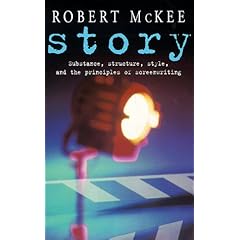
Story: Substance, Structure, Style and the Principles of Screenwriting

Robert McKee tells us, "story is not what you have to say, but how you say it." This is one of the simple truths that many a writer overlooks, and this book is brimming with even more revelations and ‘wake-up calls’ for the creative mind. Geared mainly to the film industry, this is a must for anyone interested in understanding movies, writing scripts and screenplays, or studying the Media… It is also invaluable for anyone who uses words to affect others. So if you are interested in writing stories that grip an audience, and stir their emotions, this contains many method-changing lessons. As you would expect, it is well written and readable.
Buy This Book

The Chambers Dictionary

The best-selling and most comprehensive single-volume English dictionary. The new edition claims more than 215,000 references and over 300,000 definitions which often read like informative mini-entries from a well researched encyclopaedia. Chambers is fast becoming the recognised standard for dictionaries and is the official reference dictionary for Scrabble(R)...
Buy the Standard Edition or the Thumb-index Edition of this book

On Being A Writer

This compilation of revealing interviews with various popular and respected writers forms a superb book about writing. Journalists, novelists, playwrights, commentators, poets, academics all talk about their backgrounds and the way they approach the job of writing and the writer's life... Featuring wisdom from such greats as Capote, Hemmingway, Steinbeck, Vonnegut, Faulkner, Jong, Bradbury, Ginsberg... 32 interviews, in all, addressing all aspects of writing.
(Writer's Digest, ISBN 0 89879 522 2)
This book seems to be out of print, but can still be ordered from some public libraries and is often available from sellers via amazon.co.uk
Buy This Book